Coppicing: an ancient Sussex craft
Cutting a tree down to the ground to harvest it sounds brutal. Done right, it's one of the oldest and most sustainable ways to manage a wood.
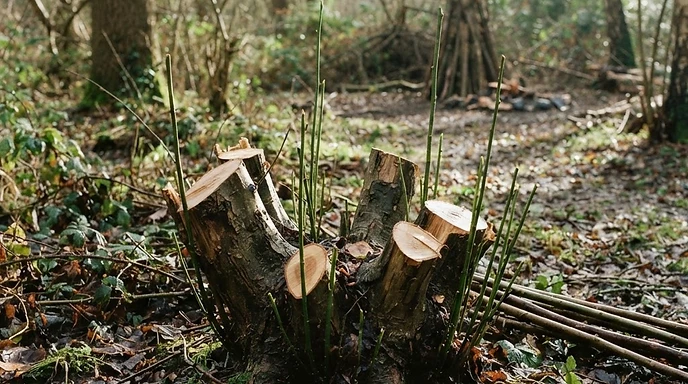
What coppicing is
Coppicing is the practice of cutting certain broadleaf trees down to a stump — a stool — and letting them regrow from the base. The new stems, called rods, come back straight, fast and clean.
It's not a modern idea. Sussex woods have been coppiced for at least a thousand years, producing bean sticks, hurdles, charcoal, thatching spars and firewood. The craft built the hedgerows and the hurdles that marked out the old countryside.
Why it works for the wood
A coppiced tree rarely dies of old age — each cut resets the clock. A stool can live for many hundreds of years, far longer than an uncut tree of the same species.
Because coppice is cut in rotation (a coupe system — a patch cut each winter, then left for 7–15 years), the wood is a mosaic of ages. That mosaic is the point:
- Open, freshly cut coupes are full of light — foxgloves, wood anemone, bees and butterflies.
- Mid-age regrowth is dense cover for nesting songbirds and dormice.
- Older coupes shade out and settle, ready for the next cut.
A worked coppice is one of the most biodiverse habitats in Britain. An unworked one slowly closes over and goes dark.
The species we work
- Hazel — the classic coppice, rods every 7–10 years, perfect for hurdles and binders.
- Sweet chestnut — longer cycle, 12–15 years, durable for fencing and posts.
- Ash and hornbeam — good for firewood and cleaving.
When to cut
Winter, when the sap is down and the birds aren't nesting. Cut low, clean and angled so water runs off. Leave the brash stacked — it rots down into the soil and shelters the next flush of growth.
A coppice isn't a tree you cut once. It's a relationship you keep, across decades.
If you have a wood with old hazel or chestnut gone leggy and dark, bringing the coppice back into rotation is the single best thing you can do for it.

