Deadwood: the forest's larder
Beneath every healthy wood runs a hidden kingdom — fungi that break down the dead, feed the living, and stitch the whole forest together underground.
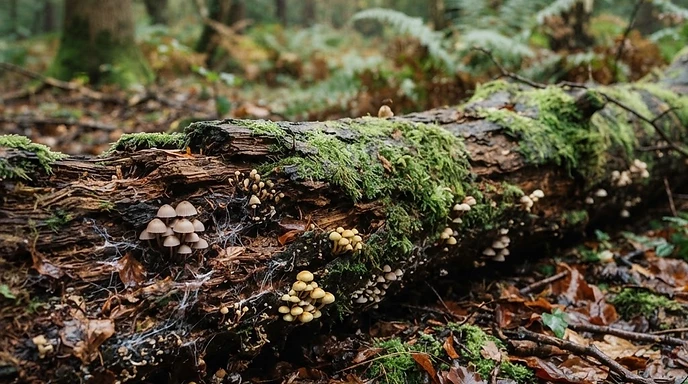
The soil is alive
Most of what happens in a wood happens out of sight, underground. A teaspoon of healthy woodland soil holds more living things than there are people on earth — bacteria, fungi, nematodes, mites, all breaking down the old into food for the new.
At the heart of it is the fungal network: a vast web of white threads, the mycelium, that runs through the soil and the dead wood alike. Fungi are not plants and not animals; they are their own kingdom, and in a wood they do the work no one else can.
What fungi actually do
- Decay. Only fungi can fully break down lignin, the tough stuff that holds wood together. Without them, the forest would choke on its own dead timber.
- Partner. Most trees — oak, beech, hazel, pine — wrap their roots in fungal threads (mycorrhiza), trading sugars from the leaf for water and minerals from the soil.
- Connect. Mycorrhizal networks link tree to tree underground, moving water and nutrients between them. A wood is less a collection of trees than a single connected system.
Deadwood is the larder
A standing dead tree, a fallen log, a stack of rotting brash — these are not mess. They are the richest habitat in the wood. Deadwood feeds beetles, solitary bees, woodpeckers and bats, and it slowly becomes soil.
In a worked wood we take what we need and leave the rest: a dead log in a shady corner, a standing dead stem if it's safe to keep. The fungi do the rest.
What you can do
- Leave deadwood. A log pile in a corner rots down into the richest compost there is.
- Don't tidy. Standing dead seed heads and stems shelter overwintering insects and their larvae.
- Inoculate. Mushroom logs and wine-cap beds turn waste wood into food while building soil at the same time.
Nothing in a wood is wasted. The dead are food for the living, and the living are built from the dead.
If you want a healthy wood, look down. The health of a wood is written in its soil.

