Seasoning firewood the wild way
Good firewood is mostly about patience — split early, stack to the wind, and let the wind do the drying. Here's how to season it the wild way.
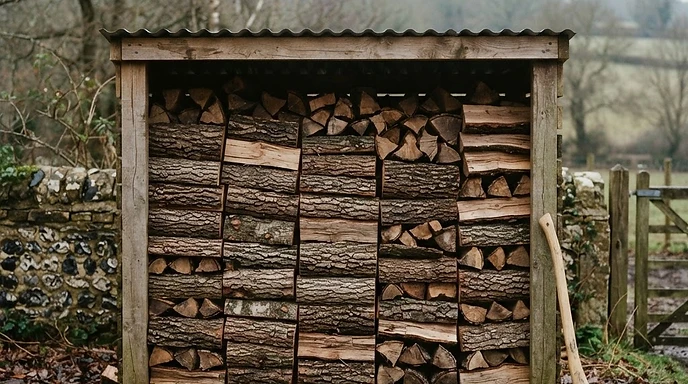
Why seasoning matters
Cut wood is half water by weight. Burn it green and you waste most of the energy boiling that water off, you coat your chimney in creosote, and you get a smoky, low-heat fire that smells and stings the eyes.
Seasoning is just giving that water time to leave. A log split, stacked in the wind and sun for a summer or two, drops from 50% moisture down to around 20% — where it burns hot, clean and quiet.
The rules
- Split early. Split logs dry far faster than rounds — you've opened the grain to the air.
- Stack to the wind. Open sides, loose rows, off the ground, top covered but sides open. Airflow does the work, not a closed shed.
- Give it time. Hardwoods need a good 12–24 months; softwoods season in 6–12.
- Bring it in early. A few weeks by the fire warms and finishes a log before it goes on.
By species
Season well, then burn:
- Oak — the king. Dense, slow, hot. Needs two years but pays it back in heat.
- Beech & hornbeam — hot and bright, clean burn, well worth the wait.
- Ash — the classic. Burns well even fairly green, but still better seasoned.
- Birch — bright, quick, lovely smell; seasons fast, burns fast.
Burn green (with care):
- Ash is the honest exception — the only common wood that burns acceptably green, though still not ideal.
Kindling & quick heat:
- Softwoods (pine, larch, spruce) — light fast, hot and spitty; great to start a fire, not to keep one going. Watch for resin in an open stove.
- Silver birch bark — one of the best natural firelighters there is, burns even when wet.
The firewood you burn next winter is the wood you split last winter.
A note on the wild
If you have a fallen tree on your land, processing it on site — sawn to length, split, stacked to season — keeps the nutrients where they belong and saves haulage. A little deadwood left behind in the wood is no loss; it's the next soil.
Season your wood, favour hardwoods, and let the wind do the drying. Your fire, your chimney and your wood will all thank you.

